

Asian hornets were inadvertently brought to France in 2004, most likely in a shipment of goods imported from east Asia. Since arriving in France, the species has spread rapidly. It is now present across France and is moving into adjoining countries.
The threat
The Asian hornet is a non-native species in the UK, as it hails from east Asia and could not arrive in the UK naturally.
The concern around the Asian hornet is that it is a significant predator of bees. In France, it has consumed large numbers of bees, including the well-known European honey bee and many lesser-known solitary and colonial bee species. Nature conservation organisations, are concerned about the impacts of Asian hornets on bees, as these pollinating species are an essential component of well-functioning ecosystems.
The Asian hornet is undoubtedly an invasive non-native species in France, and the evidence indicates it would be invasive in the UK too. It has been recorded in the UK on at least twenty-three occasions (as of December 2022). However, the relevant authorities swiftly eradicated these individuals.
Is this a hornet?
The UK is home to one native hornet: the European hornet. Here’s how to tell apart these hornets from invasive Asian hornets (sightings of which should be reported).
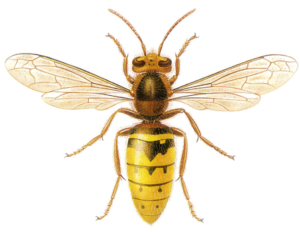
© Didier Descouens, curtesy of wildlifetrusts.org
European hornet (Vespa crabro)
- Larger than Asian hornets
- Head yellow from front and red from above
- Abdomen mostly pale yellow with black stripes
- Thorax and legs black/ reddish brown
Asian hornet (Vespa velutina)
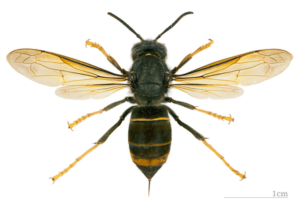
© Didier Descouens, curtesy of wildlifetrusts.org
- Smaller than native hornets
- Orange head (from front)
- Abdomen almost entirely dark, with fine yellow stripes and a yellow or orange 4th segment near the base
- Black or brown thorax
- Legs with yellow tips
Recording
It is important to report any suspected sightings of this species as soon as possible. Vigilance is particularly required in southern parts of England and Wales and around major ports. Asian hornet is active mainly between April and November (peak August/September) and is inactive over the winter. Ideally sightings should be sent to the UK Centre for Ecology and Hydrology via the links below:
- Asian Hornet Watch app for iPhone (external link)
- Asian Hornet Watch app for android (external link)
- Online recording form (external link)
You can also email a report to the NNSS. Please send a photograph and location details.
Do not under any circumstances disturb or provoke an active hornet’s nest.
For more information please visit the BBKA Asian Hornet page. This page has many graphics which you can share on your social media, websites, and by email. This includes the NNSS poster and a comparison graphic showing four insects.